
Tower Rush Game Rules & Features
By Alex Ray · @AlexRayGamabler · @lexraym
Our team has dissected every aspect of the Tower Rush experience -- from the core tower-building loop to each individual bonus trigger. Below is the full rundown so you can step in fully prepared.
Last updated: February 2026
Tower Rush Game Mechanics
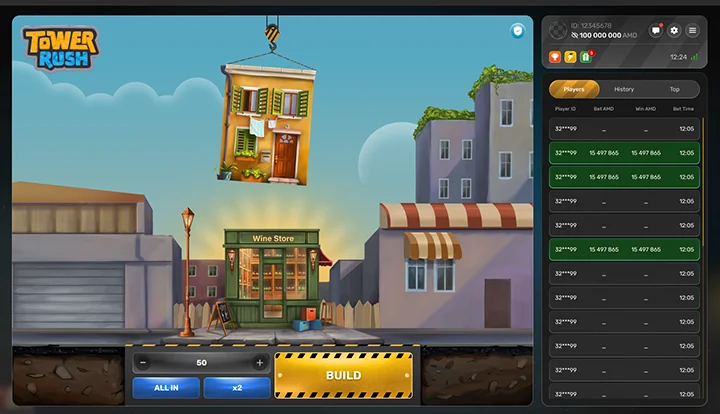
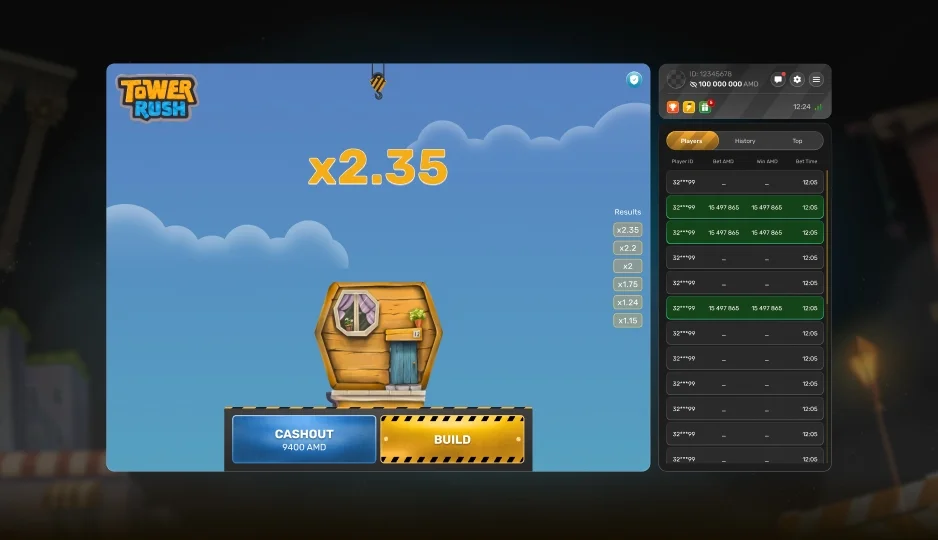
At its heart, Tower Rush asks you to do one thing: keep adding storeys to a rising tower. Every new level you place ratchets the multiplier higher, which directly boosts your potential return. The risk? Your entire structure could come tumbling down without warning.
That tension between greed and caution is what hooks you. Withdraw early and you leave potential winnings on the table. Hesitate a fraction too long and the entire bet vanishes. Everyone who has played Tower Rush knows the sinking feeling of telling themselves "one more level" only to watch it all crumble. It is precisely that knife-edge dynamic that keeps players coming back.
Underneath the visuals sits a fully certified random number generator (RNG). Put simply, no one -- neither the player nor the operator -- has any way of knowing when the collapse will occur. Each round operates in total isolation from every other. If you are just getting started, our step-by-step guide on how to play Tower Rush covers every phase of a round in detail.
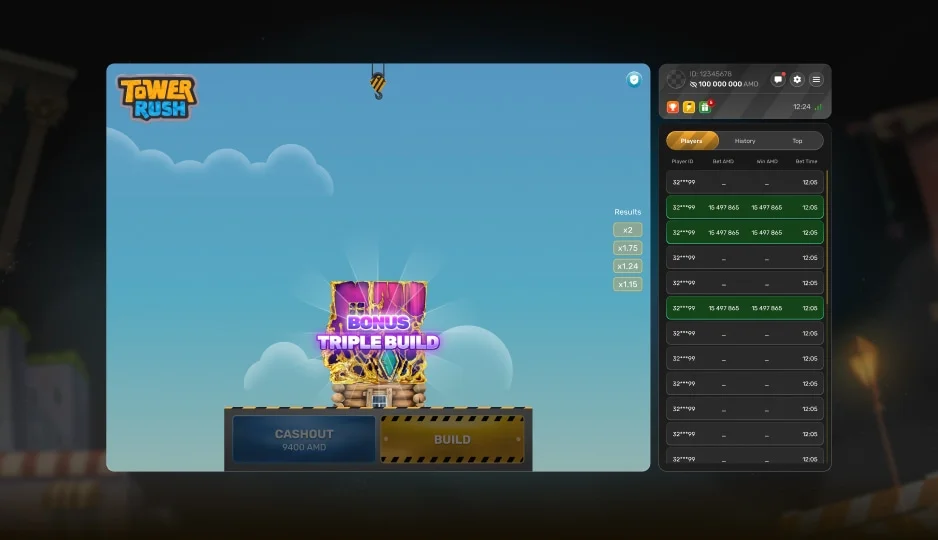
The 3 Tower Rush Bonuses in Detail
Every bonus introduces a distinct tactical twist to the round. Here is our expert analysis of all three and how to respond when they appear.
❄️ Frozen Floor

A momentary shield in the chaos
When the Frozen Floor triggers, it effectively puts the entire round on hold. For a window of 3 to 5 seconds the multiplier is held steady, and the tower is structurally guaranteed not to collapse. After rounds of mounting pressure, it is a welcome moment of calm.
From a decision-making standpoint, this bonus is invaluable. Picture yourself sitting at 12x, heart pounding, torn between securing the return or pushing further. The freeze hands you a few uninterrupted seconds to weigh your options without the fear of instant loss hanging over you.
Breakdown of the mechanics
- Multiplier held firm: it remains at the precise value it had when the freeze began -- no movement up or down
- Zero collapse risk: during the frozen window the tower is entirely safe -- that is a hard guarantee
- Construction halted: new floors cannot be placed while the freeze is active, though you can still plan your next moves
- Withdrawal permitted: you are free to hit the cash out button mid-freeze if you decide the current multiplier is good enough
Practical guidance from our sessions
Whenever a freeze lands while we are above 5x, our instinct is to pocket the earnings. That temporary safety net is a rare luxury, and walking away during it tends to be the smartest move. The freeze might not reappear for a long stretch, so treating it as a cue to collect is sound reasoning.
Players who favour a bolder approach can view the freeze differently: ride it out and immediately resume building afterwards, leveraging the fact that you have just been handed a consequence-free pause. There is genuine logic to that approach, but it does carry extra exposure.
Frequency
In our testing, Frozen Floor appeared roughly every 12 to 16 floor constructions, making it the second most frequently seen bonus. It seems to surface more commonly when the multiplier sits between 3x and 20x, although the RNG ultimately controls everything.
🏛️ Temple Floor
The highest-impact bonus in the game
The moment a Temple Floor appears, the stakes shift dramatically. It is both the rarest and the most rewarding bonus Tower Rush has to offer. While the Temple is active, every floor you construct carries between 1.5x and 3x the normal weight. The result is that the multiplier can surge at a pace you simply will not see under standard conditions.
We will be upfront: nothing else in the game delivers the same rush. Watching the multiplier climb at that accelerated rate provides a thrill that genuinely sets Tower Rush apart from other titles in the crash game genre.
The four tiers
- Tier 1 (1.5x): the entry-level Temple activation, yet still significantly more lucrative than standard building
- Tier 2 (2x): every floor contributes double value -- the returns begin to escalate noticeably
- Tier 3 (2.5x): uncommon and formidable, this is the tier where session-defining payouts take shape
- Tier 4 (3x): the pinnacle. Exceptionally scarce, but its appearance can transform a round entirely
A real example
Imagine you are sitting at 8x when a Tier 2 Temple kicks in. You manage to place 5 floors during the activation period. Under normal circumstances those 5 floors would lift you to 13x. With the Temple multiplier applied: 8x + (5 x 2) = 18x. That is an extra five levels' worth of value at no additional cost. On a stake of £20, the difference amounts to £100.
Strategy during activation
This is the one moment in Tower Rush where aggression genuinely pays off. Each floor placed while the Temple runs is so much more valuable than normal that passing it up would be wasteful. However -- and this is the critical caveat -- the Temple offers no protection against collapse. If the tower falls mid-activation, everything you have built is gone.
Our recommendation: stack 3 to 5 floors during the Temple window, then take stock. If the multiplier has already pushed beyond 20x, withdraw without hesitation. The single biggest threat during a Temple is overconfidence.
Rarity
Based on our data, the Temple appears approximately once every 25 to 35 floors constructed. Across a session involving 100 floors, expect it to surface somewhere between 2 and 4 times. That limited frequency is precisely what gives it such weight -- when you spot it, you know it represents a defining moment in the session.
⚡ Triple Build
Instant momentum in a single tap
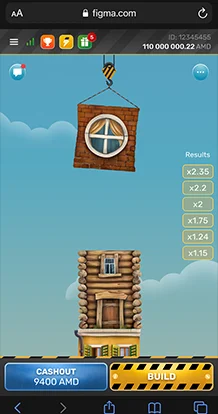
A single press of the build button and three floors slam into place one after another. The Triple Build is the most no-nonsense bonus available: when it fires, your next action plants three storeys in rapid succession rather than one. The multiplier leaps by +3 in barely a heartbeat.
How it plays out
- First floor lands immediately
- Second floor follows 0.1 seconds behind
- Third floor drops another 0.1 seconds after that
- Multiplier: +3 from a single tap
Why it matters
In the opening stages of a round, Triple Build propels you from 1x to 4x in a flash, cutting out the slow early grind. During the middle phase, it serves as an excellent catalyst to reach whatever target multiplier you have in mind. It may lack the spectacle of the Temple, but its reliability and sheer convenience make it a consistently welcome sight.
The dream combo
Triple Build + Temple Floor
Should both bonuses overlap, you are looking at the single most explosive combination Tower Rush can produce. Three floors, each carrying the Temple boost, in one action. At Tier 2 Temple level, the maths works out to 3 x 2 = +6 added to the multiplier from a solitary click. In roughly a hundred sessions, we encountered this overlap just twice. It is the kind of moment you remember long after the session ends.
The flip side
Stacking three floors simultaneously also concentrates three separate collapse probabilities into a single instant. If the tower was already teetering at a high level, the Triple Build can bring everything crashing down in one go. Once the multiplier is above 15x, carefully consider whether the potential upside justifies the concentrated risk.
Frequency
This is the bonus you will encounter most often, appearing roughly every 8 to 12 floor constructions. Its regularity is a blessing given how handy it is in practice.

Bonus Feature Comparison
Side-by-side breakdown of all three Tower Rush bonus floors so you always know how to react
| Feature | Temple Floor 🏛 | Frozen Floor ❄ | Triple Build ⚡ |
|---|---|---|---|
| Type | Multiplier boost | Collapse protection | Fast floor build |
| Effect | Each floor worth 1.5x–3x the normal value | Multiplier frozen for 3–5 seconds; tower cannot collapse | Places 3 floors simultaneously in one action |
| Frequency | Every ~25–35 floors | Every ~12–16 floors | Every ~8–12 floors |
| Rarity | Rare | Moderate | Common |
| Risk level | High — no protection against collapse | None — full safety window | Medium — 3 collapse chances stacked |
| Best moment to use | Stack aggressively — every floor has outsized value | Ideal time to decide: cash out or push further | Early or mid-game to climb multiplier quickly |
| Potential value | ★★★★★ Very High | ★★★☆☆ Medium | ★★★☆☆ Medium |
| Stacks with others? | Yes — Temple + Triple Build is the strongest combo | Yes — combine with any bonus for breathing space | Yes — Triple Build + Temple = +6 in one tap at Tier 2 |
| Alex's verdict | The defining moment of any session — push hard but know when to stop | Your most valuable decision window — use it wisely | Bread and butter — reliable and consistently useful |
Tower Rush Game Rules
The basics
- Select your wager amount before beginning construction
- Every tap adds another storey and pushes the multiplier upward
- Withdraw at any point to collect your stake multiplied by the current value
- Should the tower crumble before you withdraw, your wager is forfeited
- There is no defined ceiling on how many floors you can build
Bets and payouts
- Minimum bet: £0.10
- Maximum bet: £500
- Maximum theoretical payout: 10,000x your bet
Game fairness
Tower Rush, developed by Galaxsys, operates on a certified RNG that undergoes regular scrutiny by independent auditing bodies. The official RTP stands at 96.5% as confirmed in the developer's specifications. Every single outcome is produced through genuine randomisation. Neither the player nor the operator can influence the collapse point in any way -- that is the foundation of its fairness. You can find Tower Rush at any of our recommended casinos for UK players.
Tower Rush Game Strategies & Tips
For beginners
Before anything else, spend time with the demo version. We truly cannot overstate this -- it costs nothing and provides a risk-free environment to absorb the rhythm and pace of the game. You can play the Tower Rush free demo directly on our site. Once you graduate to real funds, keep your initial stakes minimal.
A solid starting tactic is to withdraw consistently at 2x or 3x. The individual returns are modest, but they arrive frequently, and the approach builds your familiarity with the game mechanics without subjecting you to unnecessary stress. Over time you will develop an intuition for when a round is running well and when it is time to step away.
For experienced players
The staged escalation method is something we rely on ourselves: open each session with conservative bets, then incrementally raise them following a run of successful withdrawals. It allows you to ride positive stretches without leaving yourself exposed from the outset.
One observation from our extended play: tailor your bet sizing around bonus appearances. A Temple Floor activation is the ideal moment to maximise your position. Of course, that only works if you have retained sufficient budget rather than burning through it during the early rounds. Our Tower Rush strategy guide goes deeper into ideal cash-out windows and bankroll discipline.
The golden rules
- Establish a firm spending limit before you begin and hold yourself to it
- Resist the temptation to recoup losses by inflating your next wager
- Step away periodically. After half an hour of continuous play, your decision-making quality deteriorates
- Experiment with new tactics in demo mode rather than risking real funds
- If you enjoy playing on mobile, have a look at our Tower Rush mobile download guide for installation instructions
- Entertainment should always be the primary motivation. The moment it stops being fun, close the game
FAQ: Tower Rush Rules
Is there a maximum number of floors in Tower Rush?
The game engine imposes no hard cap on floors. However, the collapse probability algorithm makes each successive level progressively more dangerous. Based on our extended testing, the vast majority of towers crumble somewhere between floors 5 and 20. Reaching floor 25 is statistically rare, and anything beyond that represents the extreme tail of the probability curve where survival odds diminish sharply with each tap.
Are the bonuses random or is there a pattern?
Each bonus is assigned independently at every floor construction by the game's random number generator. The Triple Build appears most frequently (roughly every 8 to 12 floors in our testing), the Frozen Floor surfaces every 12 to 16 floors, and the Temple Floor is the rarest at approximately every 25 to 35 floors. There is no sequential dependency between activations -- receiving one bonus does not influence when the next will appear.
Can you cancel a cash out once you've clicked it?
No. The cash-out mechanic is designed as a single, irreversible action. The moment you tap the button, your accumulated multiplier is locked and the winnings transfer to your casino balance instantly. The game provides no confirmation prompt and no undo function, so it is essential to commit to your exit point before your finger reaches the button.
What strategy works best in Tower Rush?
From a game-mechanics standpoint, the optimal approach depends on your risk tolerance. Conservative players benefit from withdrawing consistently at low multipliers (2x to 3x), which yields frequent small gains. More aggressive players can target the 5x to 10x range but should expect longer losing streaks between payouts. The key mechanical insight is to leverage bonus features wisely -- particularly the Frozen Floor pause, which offers a safe window to evaluate your position before committing.
What exactly is the RTP for Tower Rush?
The published RTP stands at approximately 96.5%, placing Tower Rush comfortably within the upper range for crash games. This figure represents the theoretical percentage of total wagers returned to players across millions of rounds. The corresponding house edge of roughly 3.5% is baked into the collapse probability distribution -- meaning the tower's survival odds at each floor are calibrated to maintain this margin over time. Individual session results will vary enormously from this average.